

Sailing Greece - Part 2

Friday, 3.5.2019
Kalimera! Anchored in the shelter of the first Greek island Othonoi, and took a little rest. The journey through Greece begins, which I am very much looking forward to. As we sailors say, favorable winds and calm seas :)
Raised anchor and literally sailed with 25 knots of wind towards the island of Corfu, of course, it was not without the company of dolphins this time either. Arrived at the first larger island of Corfu and anchored a little west of the town of Sidari, where turquoise water awaited me, with cliffs in the background. One easily falls in love with such circumstances. Soon the weather shows its teeth and the wind changes and the waves start to rise. I anchor behind the cape on the other side and enjoy the beautiful sea, which is unfortunately still too cold for my swimming, namely the water is a little over 17 degrees. Based on the weather forecast, I decide to sail in the shelter of the island's interior, towards the Gouvia marina, where I will complete the entry formalities.
Let me say that I am now in a different time zone, so there is an hour difference. I sail to the Gouvia marina, where someone from the marina is waiting for me, and tells me to check in 3 NM south in the main port of Corfu. So my journey continues to the port, where in the evening I am entertained by a lit-up 250m long cruise ship, and the view is truly fantastic. When entering, a police officer shows me where to moor. When I want to check in, he tells me that I need a DEKPO and that this is not possible, that I will have to wait until Monday, when there are official hours, because they do not work on weekends. Since my sailing is relatively short, it does not even occur to me to wait that long, so I decide to check in right in Kefalonia, which the officer confirms. I leave the customs area and moor a little further in the old town harbor. It is time to walk around the city. To my surprise, the streets are full of people, the city is beautiful, but it seems that they don't have any municipal services, as there is a lot of garbage everywhere. I take a few photos, walk a few steps and it's time for a well-deserved rest.
Saturday, 4.5.2019
I set sail in the morning, take a look at the old walls from the sea side and continue along the island. Since the airport is also nearby, I am constantly surrounded by large planes, which are a real attraction when these large masses of metal fly over my mast, and it seems that at any moment one of them will crash into it :). Strong winds are again on the agenda, and of course there is also a storm with heavy rain, which turns out to be more sand than rain itself, so my sailboat and sails are already completely yellow. The wind strengthens and the wind gauge shows a max. 42 knots. With the sails already shortened, I decide to end the sailing in shelter and rather rest a bit. I anchor in front of "AlykEs", where it is shallow enough and the anchor holds well. Light rain is suitable for resting.
Sunday, May 5, 2019
The story is no different this morning, heavy rain and wind are shaping the fate of my sailing, so I wait at anchor until the morning.
Slowly the sky cleared and the sun pushed the dark clouds to the mainland, and it was time to continue my story around Greece. With a pleasant wind of about 10 knots in the stern, I was sailing nicely towards the island of Paxos.
The island of Paxos. This is a beautiful green island, located between Corfu and Lefkada. I sailed into the first possible bay, called Lakka, put the sails away, and my eyes lit up again when I saw this turquoise color of the sea. The depth in the bay is somewhere between 2 and 5 m with a sandy bottom, good shelter and a wonderful view. The water here measures 16.8 degrees.
At the end of this small island of Paxos is also the bay of Mongonissi, where I will be staying overnight. I anchor and tie up with the stern to the shore. It is time for an important walk, because you also need to take care of your body, so that you do not get stuck too much on a few square meters of hours and hours of sailing. I walk to the other side of the island, because there are high cliffs and high waves from the open sea crash into them. When a wave hits these mighty cliffs, it thunders as if a plane had flown very low or that there was a strong thunder, and the wave shatters in all directions, it is full of sea foam. It is nice to admire this natural phenomenon, and at the same time you see and feel the power of the sea, an incredible feeling.
In the company of a catamaran and a sailboat under the English flag, we spend the night in a safe haven, as it is protected from all sides, the depth is about 5 m with a sandy bottom and in some places also with sea grass.
Monday, 6.5.2019, 7.30
A calm sea and a rising sun are the most beautiful things next to sunsets. The joy soon passes, dark clouds are still gathering in the sky, I decide to quickly take some aerial shots while the weather is still stable. Not long after, just before I want to set sail, there is a loud thunder and darker clouds are rustling behind the hill. The first drops wet the sailboat, and I decide to wait a little longer before I leave. When the storm moves on, I set sail in a light rain. I raise the sails and I am already on my way past Antipaxos. It is a small island with a few houses, a few beautiful beaches and very green. Otherwise, all the islands I have seen so far are very overgrown. I have the open sea in front of me, the waves are relatively large, the wind is very light, only 5 knots. According to the forecast, it should be somewhere up to 25 knots, so I help myself a little with the engine, also to charge the batteries. Otherwise, I have no problems with electricity, as I have 5 service batteries with around 450AH of energy and one engine battery with 100 Ah. There is also a 100W solar panel on board the sailboat, but the excess energy does not give J a headache. There are also quite a few consumers on the vessel, such as a refrigerator, autopilot, anchor windlass, various instruments such as a VHF station, depth sounder, various pumps, an Eberspacher air heater in the winter, LCD TV, radio, electric toilet, lights, navigation lights,... and when you add it all up, that is quite a lot of energy consumption.
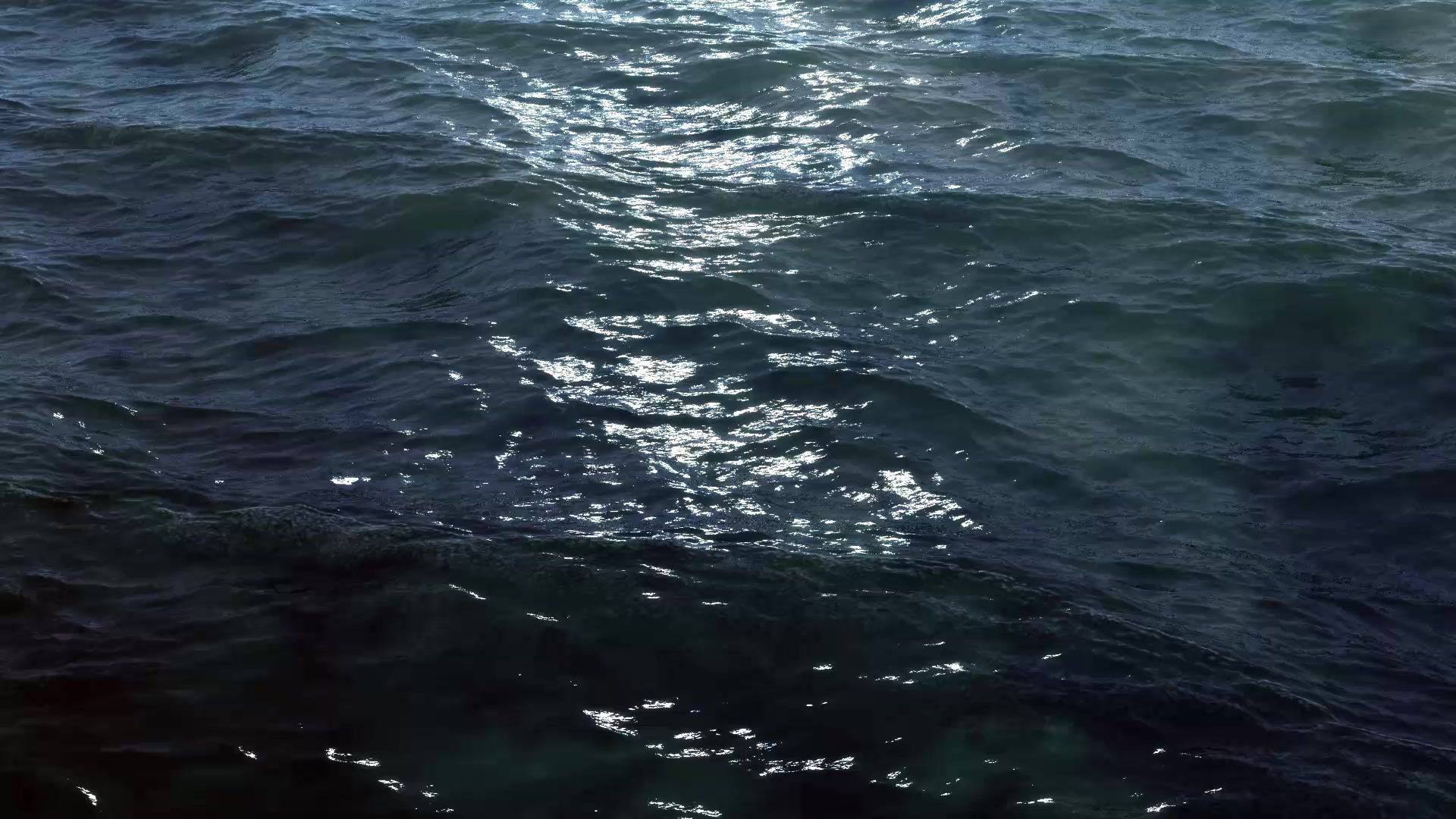
After a good half hour of rocking in high waves with minimal wind, it slowly picks up to 15-20 knots and Timy speeds up past Lefkada towards the island of Kefalonia. The speed does not drop below 7 knots, so sailing through the waves is really fast. It is 50 NM to the edge of the island. It is getting worse, both the waves and the wind. At times, Timy is shaking as she slides down the wave, and then the propeller is spinning strongly and quickly, because I have it in idle so that it can spin and thus does not slow down the sailboat, and this is because Timy does not have a folding propeller. The speed at times increases to over 9 knots, after a while the sails have to be shortened and together with the strong wind it rushes forward. The waves are now quite large, it is difficult to estimate the height in meters. To make it easier to imagine, when I am at the bottom of the wave, the horizon and the high island that I am observing disappear. The waves are long, so there is nothing worse than that my stomach is slowly suffering. As Timy slides down the wave, the sea is foaming heavily and the displacement of water under the hull is considerable. I count down the miles to the first cape of Kefalonia, which will offer me the long-awaited shelter. Even the autopilot, which had been navigating safely for the last 550 NM, had difficulty keeping up with the sailing direction at times, so I came to its aid.


Comments